


Peptic Ulcer Disease (PUD)

About the disease & condition
Aetiology & Pathophysiology
Primary causes:**
- Helicobacter pylori infection (disrupts mucosal defence).
- Nonsteroidal anti-inflammatory drug (NSAID) use (inhibits prostaglandin synthesis).
Other factors:**
- Hypersecretory states (e.g., Zollinger-Ellison syndrome).
- Severe physiological stress (e.g., critical illness, burns → “stress ulcers”).
- Smoking, alcohol, and genetic predisposition.
Pathophysiology:** Impaired mucosal defence and/or increased acid-pepsin aggression lead to ulcer formation.
Symptoms & Signs
Common symptoms:**
- Epigastric burning or gnawing pain (may improve or worsen with food: gastric ulcers often worsen, duodenal ulcers may improve).
- Bloating, nausea, and early satiety.
Atypical presentations:** Asymptomatic (especially in NSAID users).
Red-flag symptoms/complications:**
- Hematemesis, melena, or hematochezia (indicating bleeding).
- Severe, penetrating pain radiating to the back (suggesting penetration/perforation).
- Unintended weight loss, vomiting (suggesting obstruction or malignancy).
Diagnosis
- Clinical assessment:* History (NSAID use, *H. pylori risk factors), physical exam (epigastric tenderness).
- Endoscopy (gold standard):* Direct visualisation, biopsy (for *H. pylori, malignancy).
- H. pylori testing: Urea breath test, stool antigen test, or histology (if endoscopy performed).
- Testing for hypersecretory states:** Serum gastrin (if Zollinger-Ellison syndrome suspected).
- Imaging:** Abdominal X-ray or CT if perforation suspected (free air under diaphragm).
Management
Eradicate H. pylori:** Triple or quadruple therapy (PPI plus antibiotics).
Discontinue NSAIDs:** If possible, use COX-2 inhibitors or alternative analgesics with PPI cover if necessary.
Acid suppression:**
- Proton pump inhibitors (PPIs) are first-line for healing and symptom relief.
- H2-receptor antagonists (alternative).
Cytoprotective agents:** Sucralfate, misoprostol (for NSAID-induced ulcers).
Treatment of complications:**
- Endoscopic therapy for bleeding ulcers (e.g., coagulation, clipping).
- Surgery for perforation, obstruction, or refractory bleeding.
Potential Complications
- Haemorrhage:** Most common complication.
- Perforation:** Surgical emergency.
- Gastric outlet obstruction:** Due to scarring and oedema.
- Penetration:** Into adjacent organs (e.g., pancreas).
- Malignant transformation:** Rare, but gastric ulcers require biopsy to rule out malignancy.
Prevention & Follow-up
Prevention:**
- H. pylori screening/treatment in high-risk groups.
- Avoid unnecessary NSAIDs; use the lowest effective dose with PPI cover if needed.
- Smoking cessation, moderation of alcohol.
Follow-up:**
- Confirm H. pylori eradication (e.g., urea breath test).
- Repeat endoscopy in 6-8 weeks for gastric ulcers to confirm healing and exclude malignancy.
- Long-term PPI use only if indicated (e.g., recurrent ulcers, continued NSAID use).
Relevant Specialities
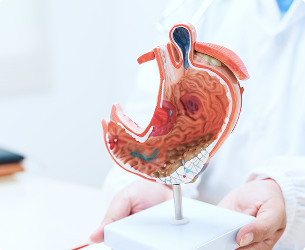
Gastroenterology
Gastroenterology is the specialty focused on the digestive system and its functions.
It supports patients with a wide range of digestive health concerns, helping maintain overall gastrointestinal health and well-being through early identification and long-term management.
At KIMSHEALTH, care is delivered through a patient-centered approach, focusing on accurate diagnosis, prevention, and ongoing support.
Available At
Here for you, every step of the way
Our medical teams bring together advanced expertise with a deeply human approach to care. From everyday care to highly specialised treatment, we ensure you feel informed, reassured, and supported throughout your journey - so your experience with us is seamless and secure.