


Thyroid Uptake and Scan

About the procedure
The thyroid uptake and scan is a nuclear medicine procedure that evaluates thyroid function and structure by measuring how much radioactive iodine or technetium the thyroid gland absorbs and creating images of the gland.
Care before the procedure
- Fasting: Avoid food and drinks for 2–4 hours before tracer administration (check facility guidelines).
- Medication Hold: Stop thyroid medications (e.g., levothyroxine, methimazole) as directed—usually 1–4 weeks prior.
- Iodine Restrictions: Avoid iodine-rich foods (e.g., seafood, iodized salt), supplements, and contrast media for 2–6 weeks.
- Health Disclosure: Inform staff if you are pregnant, breastfeeding, or taking lithium, amiodarone, or thyroid hormones.
- Tracer Administration: Swallow a tasteless capsule or liquid containing the radioactive tracer.
Care during the procedure
- Uptake Measurement (6–24 hours post-tracer): A painless gamma probe is placed near the neck for 1–5 minutes to measure radioactivity.
- Scan (after uptake or separately): You lie still on a table while a gamma camera rotates around your neck, capturing images for 20–30 minutes.
- Patient Experience:
- No pain or discomfort; you must remain still during imaging.
- Radiation exposure is low and considered safe for non-pregnant adults.
Care after the procedure
- Radiation Safety:
- Drink plenty of fluids to flush out the tracer.
- Avoid close contact with pregnant women and infants for 24–48 hours.
- Results:
- Uptake Value: High uptake suggests hyperthyroidism (e.g., Graves’ disease); low uptake indicates hypothyroidism or thyroiditis.
- Scan Findings:
- “Hot” nodules (high tracer uptake) are rarely cancerous. “Cold” nodules (low uptake) may require further evaluation (e.g., biopsy).
- Results are interpreted by a nuclear medicine physician and shared by your referring doctor.
- Follow-Up:
- Abnormal results may lead to:
- Medication adjustments.
- Radioactive iodine therapy for hyperthyroidism.
- Ultrasound or biopsy for suspicious nodules.
- Resume Normal Activities:
- Restart thyroid medications as advised.
- No dietary restrictions after the test.
- Abnormal results may lead to:
Relevant Specialties
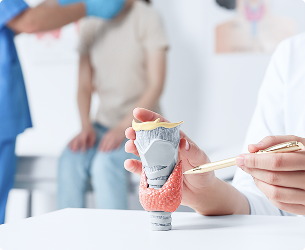
Endocrinology
Endocrinology is the medical specialty that focuses on hormone-related conditions and the body’s metabolic processes.
It supports the management of health conditions influenced by hormonal balance, helping patients maintain overall well-being through long-term monitoring and care.
At KIMSHEALTH, endocrinology care is delivered with a patient-first approach, emphasizing accurate diagnosis, continuous monitoring, and personalized management.
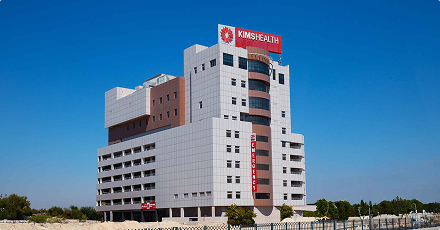
Bahrain
A trusted destination for specialised medical care supported by expert clinical professionals.
KIMSHEALTH Bahrain
6
Facilities
120+
Doctors
25+
Specialities
40+
Services