Obstetrics & Gynecology

About the Speciality
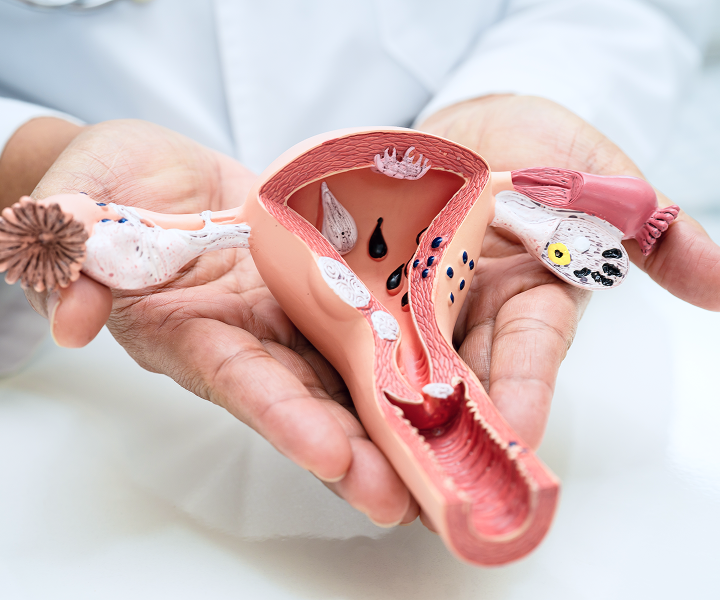
Obstetrics and Gynaecology focuses on women’s health across all stages of life, from adolescence through reproductive years and beyond.
It supports reproductive health, hormonal balance, and overall well-being, helping women navigate different life stages with confidence.
At KIMSHEALTH, care is delivered with a compassionate and patient-centered approach, focusing on personalized guidance, continuity of care, and supporting long-term health at every stage of a woman’s journey
Relevant Diseases & Conditions
Abnormal uterine bleeding
Abnormal uterine bleeding is menstrual bleeding that is unusually heavy, prolonged, or irregular. It can occur at any age and may significantly impact daily life. Common causes include fibroids, polyps, adenomyosis, ovulatory dysfunction, and coagulation disorders. Early diagnosis is essential to rule out serious conditions like malignancy and to prevent complications such as iron-deficiency anemia. Evaluation includes blood tests, imaging, and sometimes endometrial biopsy. Management focuses on treating the underlying cause and regulating menstrual cycles with medication or procedures.
Bartholin cyst / Abscess
A Bartholin cyst or abscess occurs when the duct of the Bartholin gland becomes blocked or infected. These glands, located on either side of the vaginal opening, normally secrete fluid for lubrication. Obstruction causes fluid accumulation forming a cyst, while infection can lead to abscess formation. Symptoms include painful swelling, discomfort, and sometimes fever. Diagnosis is usually clinical. Management focuses on drainage, often with a Word catheter, and antibiotics if infected, preventing recurrence and further complications.
Cervical Intraepithelial Neoplasia (CIN)
Cervical Intraepithelial Neoplasia (CIN) is a precancerous condition involving abnormal changes in cervical cells, graded from CIN 1 (mild) to CIN 3 (severe). Persistent infection with high-risk human papillomavirus (HPV) is the main cause. CIN is often asymptomatic and detected through routine screening. Early diagnosis with Pap smear and colposcopy-guided biopsy allows timely treatment. Management focuses on removing high-grade lesions and preventing progression to invasive cervical cancer, along with vaccination and regular monitoring to maintain cervical health.
Relevant Procedures
Abdominal and Pelvic Obstetric Examination
A physical examination performed during pregnancy to assess maternal reproductive organs and fetal health. It evaluates fetal growth, position, and development, and helps identify potential complications early. The procedure includes inspection, palpation (Leopold’s maneuvers), percussion, and auscultation, and may be complemented with the Doppler ultrasound or cardiotocography (CTG) for fetal heart monitoring. Non-invasive and safe, it guides obstetric care by estimating gestational age, assessing fetal lie and engagement, and detecting conditions like multiple pregnancies or intrauterine growth restriction (IUGR).
Breast Exam
Breast exam is a clinical evaluation of the breast tissues aimed at detecting lumps, asymmetry, or other abnormalities. It can be performed as part of routine screening or when patients report symptoms such as pain, swelling, or nipple discharge. The procedure involves visual inspection and manual palpation of the breasts and axillary regions. Based on findings, further imaging like mammography, ultrasound, or MRI may be recommended. No recovery is required, and patients are often taught self-exam techniques for ongoing monitoring and early detection.
Cervical Biopsy
A cervical biopsy involves removing a small tissue sample from the cervix for microscopic examination. It is performed to diagnose precancerous lesions, cervical cancer, or investigate abnormal Pap smear results. The procedure is done under local anesthesia using punch biopsy or cone biopsy techniques, often guided by a colposcope for precision. The tissue sample is sent for histopathological examination and may be combined with HPV testing. Mild cramping and spotting are common after the procedure, and proper post-procedure care ensures safe recovery.
Cervical Screening & Cryocautery
Cervical screening uses Pap smear or HPV testing to detect precancerous changes early. Cryocautery treats abnormal cervical cells by freezing them with liquid nitrogen or carbon dioxide under colposcopic guidance. This procedure prevents progression to cervical cancer and is performed after abnormal screening results. Mild cramping or vaginal discharge may occur post-procedure. Recovery requires temporary precautions, including avoiding tampons, sexual intercourse, and swimming. Follow-up Pap smears ensure complete healing and confirm the effectiveness of treatment, maintaining long-term cervical health.