Ophthalmology

About the Speciality
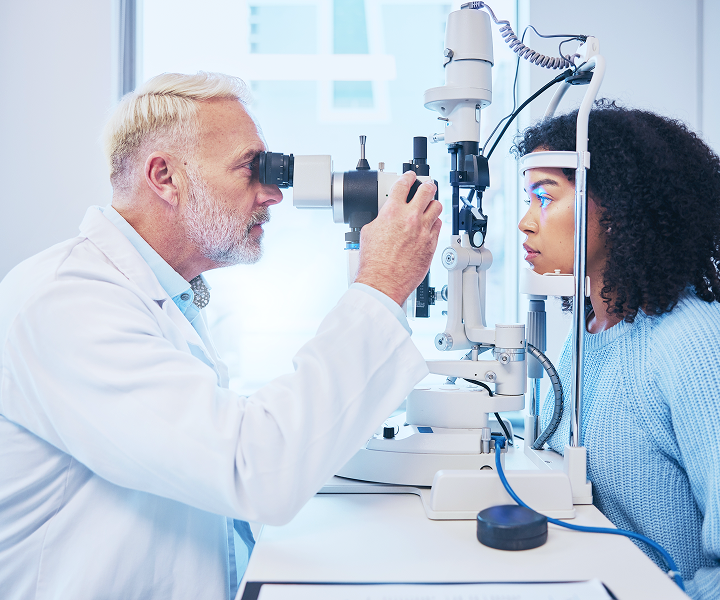
Ophthalmology focuses on the health of the eyes and vision, supporting individuals in maintaining clear sight and overall eye health.
It addresses a wide range of eye-related concerns, helping in the early identification and ongoing management of conditions that may affect vision and eye function. The specialty also plays an important role in preserving long-term visual health and quality of life.
At KIMSHEALTH, ophthalmology care is delivered through a patient-first approach, focusing on accurate evaluation, personalized care, and supporting long-term eye health and well-being.
Relevant Diseases & Conditions
Astigmatism
Astigmatism is a common refractive error caused by irregular curvature of the cornea or lens, leading to blurred or distorted vision. It can occur alongside myopia or hyperopia and may be congenital, acquired from eye injury, surgery, or conditions like keratoconus, with a possible genetic predisposition. Symptoms include blurred vision at all distances, eye strain, headaches, squinting, and difficulty seeing at night. Diagnosis involves visual acuity testing, keratometry, corneal topography, and refraction assessment. Management includes corrective lenses or refractive surgery in selected cases.
Cataract
A cataract is the clouding of the natural lens of the eye, causing gradual vision loss. It is most common in older adults but can occur at any age. Risk factors include ageing, diabetes, prolonged steroid use, UV exposure, eye trauma, smoking, and family history. Symptoms include blurred or dim vision, glare, halos around lights, and frequent changes in glasses prescription. Diagnosis involves slit-lamp examination, visual acuity testing, refraction, and dilated retinal exam. Management includes UV protection, controlling risk factors, and surgical lens replacement when vision is significantly impaired.
Conjunctivitis (Pink Eye)
Conjunctivitis is inflammation or infection of the conjunctiva, the clear membrane covering the white part of the eye. It can be caused by bacteria, viruses, or allergens. Common risk factors include infections like adenovirus, allergies to pollen or dust, contact lens irritation, and environmental irritants such as smoke or chlorine. Symptoms include redness, tearing, itching, burning, sticky discharge, and morning eyelash crusting. Diagnosis is primarily clinical, with swabs or cultures in severe cases. Management involves hygiene, avoiding eye rubbing, and using prescribed eye drops.
Corneal Abrasion
A corneal abrasion is a superficial scratch or injury to the cornea, often caused by trauma or a foreign body in the eye. Common risk factors include dust, sand, fingernail injuries, improper contact lens use, and rubbing the eye when debris is present. Symptoms include sudden eye pain, tearing, light sensitivity, foreign body sensation, redness, and blurred vision. Diagnosis is made using fluorescein dye and slit-lamp examination. Prompt care prevents infection, corneal ulceration, scarring, and potential permanent vision loss.
Relevant Procedures
Blepharoplasty
Blepharoplasty is a surgical procedure to correct excess eyelid skin, muscle, or fat for functional or cosmetic purposes. It can improve the visual field in cases of upper eyelid redundancy, reduce eyelid heaviness, or rejuvenate the eyelid appearance. The surgery involves making skin crease incisions on the upper or lower lids, removing or repositioning fat and skin, and is performed under local or general anaesthesia. Small dissolvable sutures are typically used. Preoperative assessment includes visual field testing, eyelid measurements, photography, and evaluation for anaesthesia fitness. Postoperative care ensures proper healing and minimal complications.
Chalazion Excision / Stye Removal
Chalazion excision or stye removal is a minor surgical procedure to drain or excise a persistent chalazion (meibomian gland cyst) or an external stye that does not respond to conservative treatment. It is performed under local anaesthesia, with incision and curettage for chalazions, while some cases may be managed with steroid injection. Clinical examination ensures correct diagnosis and excludes atypical lesions. Post-procedure care includes topical antibiotic or steroid ointment and follow-up to monitor healing, with swelling typically resolving within days to weeks.
Contact Lens Removal
Contact lens removal is the process of safely taking out soft, rigid, or scleral contact lenses, either by the patient or a clinician. It is performed routinely for lens replacement, in cases of discomfort, when a lens is stuck, or before ocular procedures. Soft lenses are typically removed manually, while rigid or scleral lenses may require specialised techniques or instruments. A slit-lamp exam may be done if removal is difficult or corneal injury is suspected. Post-removal care includes inspecting the cornea and advising proper lens hygiene to prevent complications.
Corneal Scraping
Corneal scraping is a diagnostic procedure performed to obtain superficial material from the cornea for microscopy, culture, and sensitivity testing when an infection is suspected. It is used to identify causative organisms in infectious keratitis, including bacterial, fungal, or Acanthamoeba infections, to guide targeted therapy. The procedure is performed under topical anaesthesia at the slit lamp or in a sterile theatre using a blade or spatula to scrape the affected area. Samples are placed on slides and culture media, and treatment begins promptly based on preliminary or culture results.