
Orthopaedics

About the Speciality
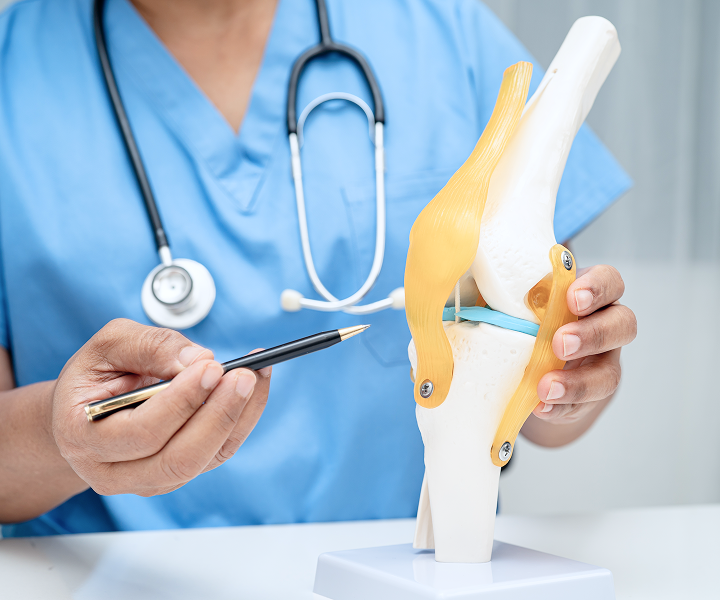
Orthopaedics focuses on the musculoskeletal system, including bones, joints, muscles, and ligaments.
It supports individuals with a wide range of conditions that may affect movement, strength, and overall physical function. The specialty plays an important role in helping patients maintain mobility, manage discomfort, and improve their quality of life over time.
At KIMSHEALTH, orthopaedic care is delivered through a patient-centered approach, focusing on recovery, movement, and long-term quality of life.
Relevant Diseases & Conditions
Arthritides (Various Types of Arthritis)
Arthritides are a group of inflammatory or degenerative joint diseases causing pain, swelling, and stiffness. Common types include rheumatoid arthritis, an autoimmune disorder, and osteoarthritis, caused by age-related wear and tear. Symptoms often include joint pain, morning stiffness, and reduced motion. Diagnosis is made using blood tests and imaging. Untreated arthritis can lead to joint deformity and limited mobility. Management involves medications, physiotherapy, maintaining a healthy weight, and regular low-impact exercise to preserve joint function and quality of life.
Arthroscopy (Knee, Shoulder, Ankle, Elbow)
Arthroscopy is a minimally invasive surgical procedure used to diagnose and treat joint problems. A small camera, called an arthroscope, is inserted through tiny incisions to visualize and repair damaged tissues. It is commonly performed for sports injuries, degenerative joint conditions, or persistent joint pain and swelling. Benefits include faster recovery, reduced pain, and minimal scarring. Post-procedure care and rehabilitation are essential to restore joint function, prevent complications, and maintain long-term mobility.
Back and Neck Pain
Back and neck pain are common orthopedic issues affecting spinal muscles, ligaments, and discs. Causes include poor posture, prolonged sitting, disc herniation, muscle strain, or arthritis. Symptoms range from stiffness and pain to tingling or numbness if nerves are involved. Diagnosis involves physical examination and imaging like X-rays or MRI. Complications may include chronic pain and nerve compression. Management focuses on ergonomic adjustments, regular stretching, strengthening exercises, and early intervention to maintain mobility, reduce pain, and prevent recurrence.
Back and Spine Disorders (including Sciatica, Cervical Spondylosis, Disc Prolapse)
Back and spine disorders encompass conditions affecting the spinal column, leading to pain, nerve compression, and limited movement. Common issues include sciatica, cervical spondylosis, and disc prolapse. These disorders often result from age-related degeneration, herniated discs, poor posture, or trauma. Diagnosis involves physical examination, imaging such as MRI or X-ray, and occasionally nerve conduction studies. Management focuses on pain relief, physiotherapy, ergonomic adjustments, posture correction, and strengthening exercises to prevent complications like chronic pain, nerve damage, and reduced mobility.
Relevant Procedures
Arthroscopic Surgery (Knee, Shoulder, Ankle, Elbow)
Angiography (or coronary catheterization) is a minimally invasive diagnostic procedure used to visualize blood vessels, particularly the coronary arteries, to identify blockages or narrowing. Angioplasty with stent placement is a therapeutic procedure often performed immediately after angiography if a significant blockage is found. It involves widening the narrowed artery and inserting a small mesh tube (stent) to keep it open.
Biologic Therapy for Rheumatoid Arthritis
Biologic therapy involves targeted medications that modulate specific components of the immune system to treat moderate to severe rheumatoid arthritis (RA). Common biologics include TNF inhibitors, IL-6 inhibitors, and B-cell or T-cell modulators. These therapies are used when standard DMARDs fail to control disease activity.Administered via subcutaneous injection or intravenous infusion, biologic therapy helps reduce inflammation, relieve pain, and prevent joint damage. Baseline infection screening is essential before starting treatment. Ongoing care includes regular laboratory monitoring and adjustments to doses based on patient response and side effects.
Carpal Tunnel Release Surgery
Carpal tunnel release surgery is performed to relieve compression of the median nerve at the wrist, which can cause pain, numbness, and weakness in the hand and fingers. The procedure can be done via an open or endoscopic approach, depending on the surgeon’s preference. During surgery, a small incision is made, and the transverse carpal ligament is cut to free the median nerve. The procedure is usually done under local or regional anesthesia. Early finger movement, wound care, and gradual hand therapy aid recovery, which typically takes several weeks to months.
Closed Reduction and Plaster/Cast Application of Fractures
Closed reduction and plaster or cast application is a non-surgical procedure used to realign fractured bones without surgical intervention. The fracture is manually set under analgesia or sedation, and proper alignment is confirmed using X-rays. Once aligned, the bone is immobilized with a plaster or synthetic cast to maintain stability during healing. The procedure helps correct displaced fractures without surgery and ensures proper bone union. Post-procedure care involves cast maintenance, elevation of the affected limb, monitoring neurovascular status, and physiotherapy after cast removal to restore function and strength.